EV Charging RFP Summary September 2025
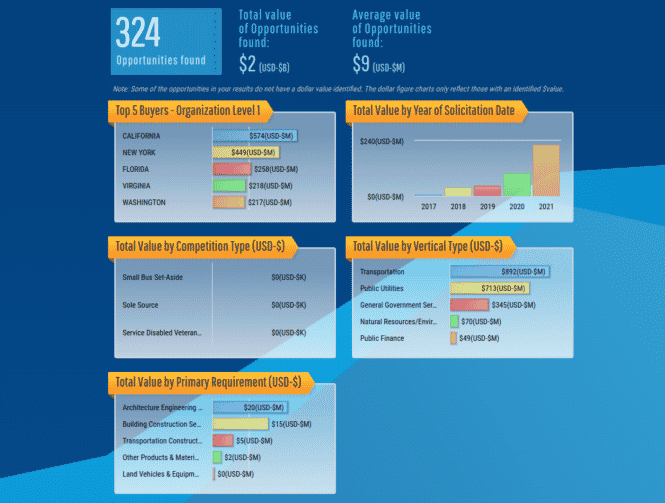
The attached file contains over a dozen recent and upcoming RFPs (Requests for Proposals) in the U.S. related to electric vehicle (EV) infrastructure and green building initiatives. These solicitations are driven by federal and local investments—often through Bipartisan Infrastructure Law grants—for public charging, fleet upgrades, facility improvements, and sustainability programs across states including California, Colorado, Maryland, New York, North Carolina, Florida, and Washington.EV-All-Content_09-02-2025-compressed.pdf
California: EV Infrastructure Proliferation
California leads in several large and small RFPs:
-
Yurok Tribe EV Infrastructure Plan (Del Norte County, Klamath, CA): Seeks a consultant to design a comprehensive EV infrastructure plan supporting public and tribal transportation needs. Proposal deadline is Sept. 4, 2025. The plan will detail current needs and future strategies for EV charging expansions.EV-All-Content_09-02-2025-compressed.pdf
-
Simi Valley (Santa Susana, CA): Proposed project—$962K—aims to add public and fleet-use EV charging stations, reducing citywide emissions and facilitating fleet electrification over fiscal years 2027–2029.EV-All-Content_09-02-2025-compressed.pdf
-
Beverly Hills: Large capital investment of $11M for upgrading and expanding EV charging in city-operated parking garages and fleet locations. Focus on level-2 chargers, infrastructure updates, and compliance with climate action goals for 2026–2029.EV-All-Content_09-02-2025-compressed.pdf
-
Los Angeles (Harbor Yard, Exposition Park): Municipal/fleet EV charging expansions in 2025, including solar and battery storage at Exposition Park using categorical CEQA exemption. Another city RFP (G1306) targets Phase I charging for Harbor Yard fleet vehicles, budgeted at $220K.EV-All-Content_09-02-2025-compressed.pdf
-
Oxnard, Hayward, Livermore, Solvang: Multiple small-to-medium RFPs (ranging $250K–$4M) earmarked for expanding public chargers, supporting municipal fleets, and upgrades to existing infrastructure. Livermore’s substantial Phase 2 project proposes 100 new ports across several city facilities, including Level 2 and DC fast chargers.EV-All-Content_09-02-2025-compressed.pdf
-
Imperial City: Grant-funded parking lot project (about $703K) covers installation of charging stations and purchase of three city vehicles. Phase III continues installation and further EV purchases for municipal use.EV-All-Content_09-02-2025-compressed.pdf
-
Santa Margarita Water District Headquarters: $4M planned in 2026–2028 for EV charging infrastructure, with details pending at this stage.EV-All-Content_09-02-2025-compressed.pdf
Colorado: Community and Federal Grant-Funded Network
-
Boulder County Community EV Charging: Seeks vendors for comprehensive design, construction, and maintenance of public community charging infrastructure. Funded through U.S. DOT FHWA Charging and Fueling Infrastructure (CFI) grants, this RFP demands NEVI compliance (97% station uptime, turnkey support for site hosts).EV-All-Content_09-02-2025-compressed.pdf
-
Boulder (CO) RFP: Promotes public-private partnership; chosen vendors will aid site hosts through site assessment, permitting, installation, and ongoing support to maintain reliable, affordable, and accessible charging stations throughout Boulder County.EV-All-Content_09-02-2025-compressed.pdf
Maryland: Schools, Counties, Municipalities
-
Anne Arundel County Schools (South River High School): Solicitation for 2025 focuses on EV bus charging station installation. Pre-bid conference held at school site; vendors must register for updates. This complements broader county investments in EV charging and green tech infrastructure ($11.8M planned over 2026–2031 for fleet conversion, charging station upgrades, maintenance, safety equipment, and training).EV-All-Content_09-02-2025-compressed.pdf
-
Village of Friendship Heights (Bethesda/Chevy Chase, MD): Public notice for EV charging stations to serve local community. Due Sept. 29, 2025.EV-All-Content_09-02-2025-compressed.pdf
-
Frederick County: $3.38M over 2026–2031 to enable electric fleet transition by building out charging sites, electric service upgrades, and supporting cash match for associated grants. Initiatives align to county resolutions targeting 50% GHG reduction by 2030, and 100% by 2050. Also tied to state-level regulation mandating full EV sales by 2035.EV-All-Content_09-02-2025-compressed.pdf
New York: Green Leasing and Real Estate
-
Lower Manhattan, NYS Office of General Services (OGS): RFI for 33,900 sq ft of office space for 122 employees, prioritizing green building practices, energy efficiency, LEED/green certification, and infrastructure for EV charger installation. Explicit requirements for sustainability and resiliency reports, compliance with Executive Order 22 (green procurement, solid waste audit, recycling), and service-disabled and minority/women-owned business development participation.EV-All-Content_09-02-2025-compressed.pdf
-
Albany County: Another RFP in post-RFP status for environment and conservation services, similarly focused on sustainable design and EV readiness.EV-All-Content_09-02-2025-compressed.pdf
North Carolina: Grant-Leveraged Public Charging
-
Orange County (Hillsborough, NC): $250K project scheduled for 2026–2034 to leverage $50K grant money towards adding public EV stations in key county locations. Focus is on expanding access and using external funding for local infrastructure build-out.EV-All-Content_09-02-2025-compressed.pdf
Florida: Regional Highway Charging Expansion
-
Palm Beach County (SR-80/US-27): Large multi-phase ($2.4M) program aims to install new highway charging stations in North and West Palm Beach region. The main goal is to expand corridor charging infrastructure for broad public use and climate action, funded and managed under TIP/Capital Improvement Plan for 2026.EV-All-Content_09-02-2025-compressed.pdf
Washington: Fleet Electrification
-
Cheney, WA: Several awards ($374K and $32K) fund municipal fleet vehicle replacement (7 EVs) and install associated solar panel charging canopies. The projects are administered via Department of Transportation grants and support a broader transition from gas-powered to electric maintenance fleets.EV-All-Content_09-02-2025-compressed.pdf
Key Themes Across RFPs
Sustainability and Climate Action
Many RFPs emphasize sustainability, resilience, and compliance with climate-related policies—such as GHG emissions reduction targets, climate action plans, and legislative mandates for fleet electrification. Projects include green certification (e.g., LEED), renewable energy (onsite solar), and building infrastructure upgrades that future-proof EV adoption.EV-All-Content_09-02-2025-compressed.pdf
Turnkey Solutions and Site Host Support
Especially in Boulder County and similar projects, RFPs ask for vendors who can provide turnkey solutions: assisting hosts every step of the way—from site assessment to installation, permitting, operations, and ongoing maintenance. Service level guarantees (e.g., uptime, user satisfaction) are specified as outcomes.EV-All-Content_09-02-2025-compressed.pdf
Grant Compliance and Federal Standards
Solicitations funded by federal grants (DOT, DOE, FHWA) have explicit requirements to comply with National Electric Vehicle Infrastructure (NEVI) standards, reporting protocols, and other administrative stipulations for spending and technical specifications.EV-All-Content_09-02-2025-compressed.pdf
Municipal and Public-Private Cooperation
Projects span public fleets (police, administrative vehicles, school buses), municipal/federal parking lots, and community-accessible public chargers. Increasingly, cities seek collaborations with private sector site hosts and third-party vendors who will own, operate, and maintain the installed assets through service contracts.EV-All-Content_09-02-2025-compressed.pdf
Accessibility and Equity
Requirements around ADA compliance, equitable business participation (including minority/women-owned and service-disabled veteran owned businesses), and domain-specific reporting (waste stream audits) reflect new legal mandates for inclusivity and transparency in public procurement.EV-All-Content_09-02-2025-compressed.pdf
Technical Modernization
Some RFPs mention specific upgrades (e.g., conversion of engine systems to hybrid/electric, installation of DC fast chargers, upgrades for new EV models, integrated solar and battery storage, dedicated server room cooling and metering for tenant agencies), showing an evolving technical landscape for associated facilities and vehicles.EV-All-Content_09-02-2025-compressed.pdf
Next Steps for Respondents
Interested vendors should note:
-
Proposal deadlines range from early September 2025 to late January 2026 and beyond.
-
Many solicitations require advance online registration, scaled architectural plans, specific sustainability summaries, and completed official forms or questionnaires (some downloadable from agency sites).
-
Partnerships with regulated business categories (MWBE, SDVOB) can provide competitive advantages or are required for eligibility.
-
Ongoing opportunities exist for those offering integrated hardware and maintenance solutions, consulting, or specialty fleet conversion services.EV-All-Content_09-02-2025-compressed.pdf
The summarized projects signal a nationwide acceleration in EV infrastructure deployment, covering highway corridors, municipal fleets, community stations, government buildings, and workforce facilities, aligned to climate and federal policy objectives.EV-All-Content_09-02-2025-compressed.pdf